
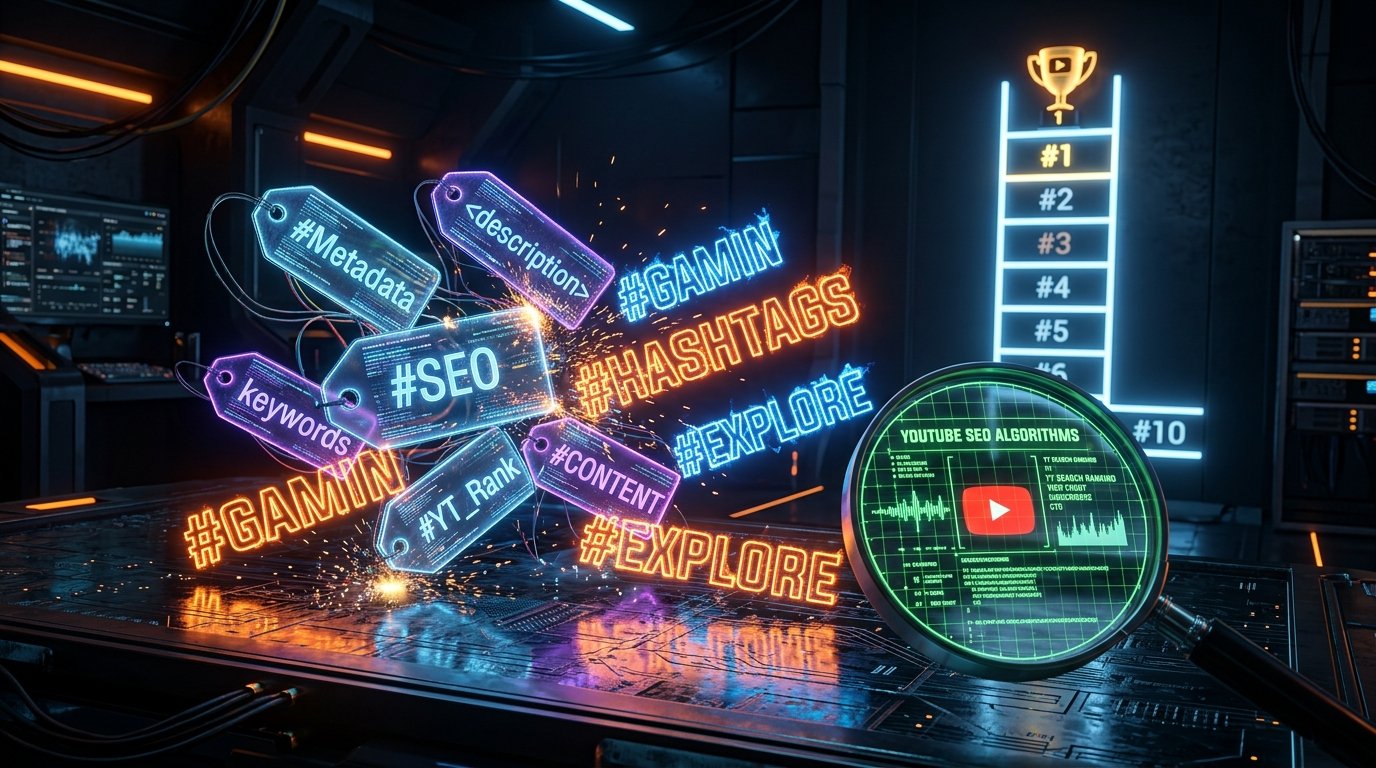
Search for YouTube SEO advice, and you will find two completely opposite camps: one guru telling you that tags are 100% useless because YouTube said so, and another claiming that stuffing 500 characters of tags is the secret to 100k views. So who is telling the truth?
The answer is more nuanced than either extreme. In 2026, YouTube natural language processing (NLP) transcribes every spoken word in your video, but tags and hashtags still perform critical, specific indexing jobs that small channels cannot afford to ignore.
1. Video Tags (Backend Metadata) vs Hashtags (#)
Backend Video Tags
- Hidden in YouTube Studio settings.
- Helps YouTube parse misspellings, colloquial slang, and related niche synonyms.
- Provides semantic context to connect your video with similar content in "Up Next" recommendations.
- Limited to 500 characters.
Visible Hashtags (#)
- Placed in video description or title with a "#".
- Creates clickable topic hubs grouping all videos across YouTube with the same hashtag.
- Essential for YouTube Shorts discoverability.
- Best practice: 3 to 5 targeted hashtags per upload.
2. The 4-Layer Tagging Formula That Ranks
Do not just paste random generic words like viral, gaming, funny into your tag box. That tells the algorithm nothing. Instead, use the 4-layer pyramid:
- Target Focus Keyword: Your exact video title topic (e.g., how to get 4000 watch hours fast).
- Long-Tail Variations: What people type when searching (e.g., complete watch time legally, youtube watch hours trick 2026).
- Broad Category Tags: High-level topic (e.g., YouTube growth, YouTube monetization, small creator tips).
- Brand & Misspellings: Your channel name and common typos of your topic.
⚡ Instant Keyword Generator:
Stop typing tags manually. Generate high-ranking, copy-paste ready tags in seconds using our free BoostifyLive YouTube Tag Generator.
Supercharge Your YouTube SEO in 2026
Use our full suite of creator tools & view exchange to propel your videos to the top of search results.
Access All Free Creator Tools →

